
Is Dark Academia is Real?
Your Favorite Dark Academia Fantasy Tropes had Real Historical Backing
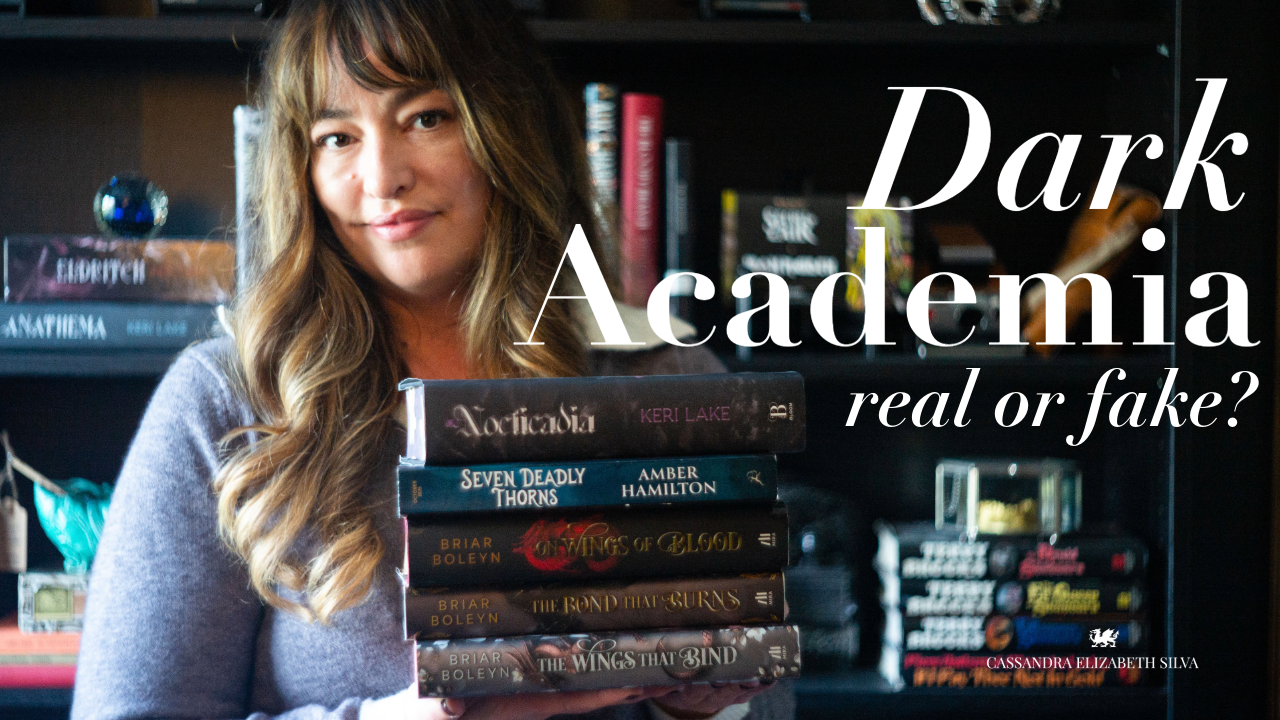
Dark Academia in Fantasy isn't just about tweed jackets, moody libraries, and brooding professors—it’s actually a modern evolution of the harsh realism within scholastic medieval Europe.
Your Favorite Dark Academia Fantasy Tropes had real historical backing: Academic Elitism, Dormitory Warfare, Violent Examinations, and Illegal Arcane Studies are all physical manifestations that did occur in Medieval History. This brutal reality was then romanticized during the 18th century Gothic Revival period and carries on through today.
Dark Academia now is famously associated with appeasing visuals consisting of candlelit study sessions, ancient languages, and elitist institutions.
When we look at popular fantasy books set in a university, are we just indulging in an aesthetic, or is there real historical and philosophical framework hiding behind the fantasy romance?
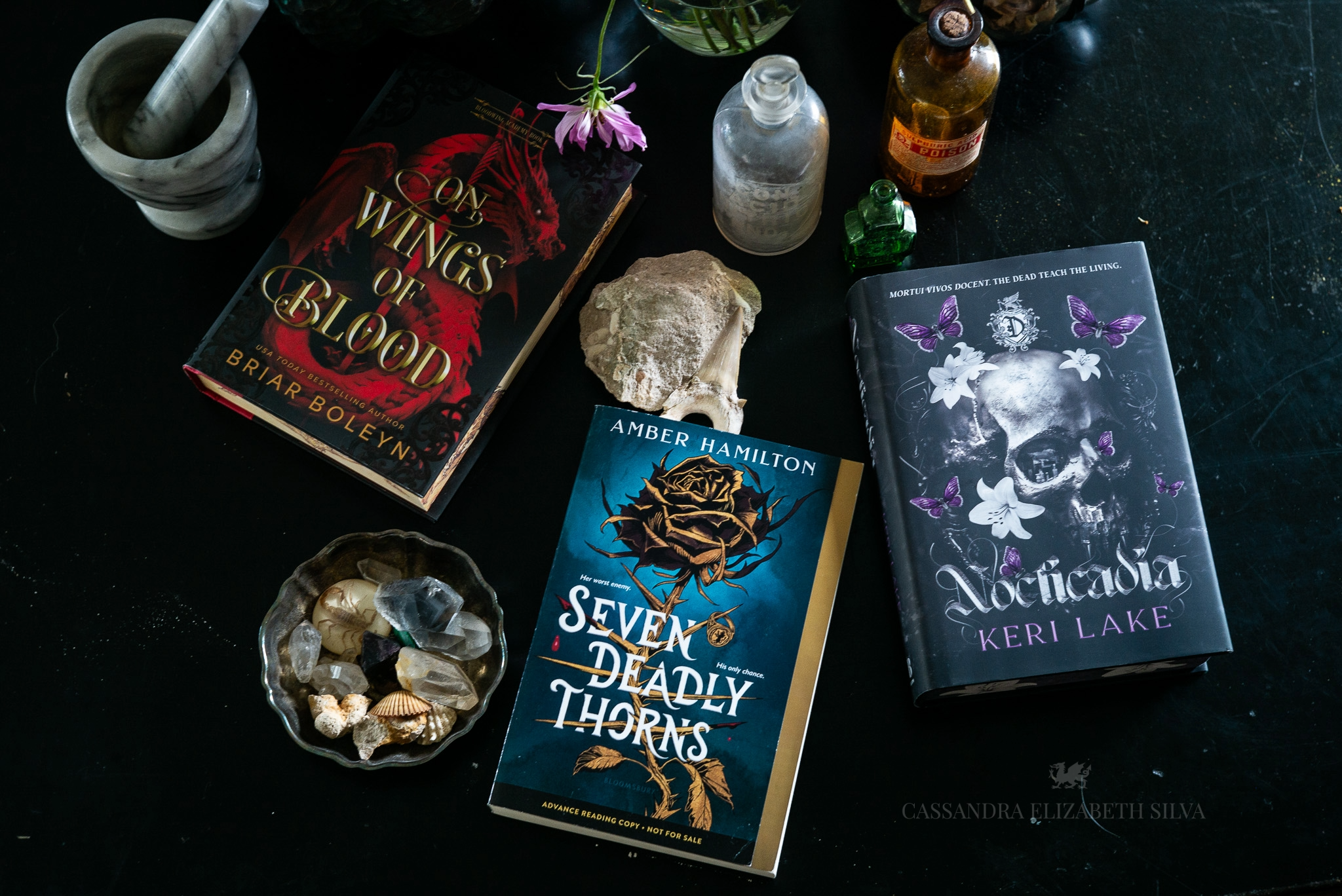
In this essay, we’re using Nocticadia by Keri Lake, Seven Deadly Thorns by Amber Hamilton, and the Bloodwing Academy series by Briar Boleyn to examine the true history behind a few favorite Dark Academia tropes a little further.
For a little refresher:
Nocticadia* by Keri Lake is a Dark Academia Gothic Romance about a university student, Lilia who is admitted to a prestigious private university to study these parasitic worms to help find a cure for the illness that killed her mother. She gets involved with her professor who is an expert on these parasites and the story goes from there.
Seven Deadly* Thorns by Amber Hamilton follows Viola, a student in a cursed kingdom. She has shadow magic that she hides. The queen wants Viola dead and sends an assassin to unalive her. But Viola ends up working with the assassin to help solve the mystery of the king’s murder before time runs out.
And finally, the Bloodwing Academy Series* by Briar Boleyn follows Medra Pendragon as she falls from another realm into a new world that is dominated by vampires. Medra must navigate the dominating vampire hierarchy that stretches into Bloodwing Academy. There, she discovers a secret about the four dragon statues resting in the courtyard.
Pour yourself something good and settle in because we’re getting right into it.
Academia Elitism & Scholarly Entitlement
First we must acknowledge a prevalent socio-economic condition that was (and arguably is still in present day) Academic Elitism & Scholarly Entitlement.
Academic elitism was prevalent during the medieval ages and its fascination continues through today. Those who could read and provide pan-linguistic services to the aristocracy were heavily revered. In fact, many universities who fell under the protection of the pope were granted self-governing privileges thus becoming exclusive of public rulings. Naturally this divine approval further steeped into the minds of the teachers and students. They knew they could get away with a lot and be the recipient of little-to-no retaliation because of papal protection.
We see educated privilege in all university-set fantasy stories. There’s almost always at least one student who comes from an underprivileged background, who is awarded scholarship to an institution of higher learning that they would otherwise never be able to afford to attend. And they’re usually bullied by someone who is part of the well-off student body. Being a member of the upper-class of society with seemingly unlimited resources while enrolled at these intuitions often granted self-imposed rights within the student hierarchy. It’s the privilege presumption of the offender that yields the rest of the student body to them, thus, creating this hierarchy.
One well known real-world example of student body elitism can be found within the events of the St. Scholastica Day Riot. As medieval historians note, on February 10, 1355, a group of Oxford University students were in the Swindlestock Tavern and were complaining the tavern offerings were not to their liking. The tavern townsfolk were upset their local tavern wasn’t good enough for the students. Tavern brawls broke out which ultimately led to a three-day riot, ending wth the university itself being raided by the angry townsfolk. There’s gory accounts of academics being scalped and a large number of university students and scholars being killed in comparison to the number of townsfolk.
Student wealth and privilege was given, justified, and even protected in both Seven Deadly Thorns and the Bloodwing Academy series.
The MMC in Seven Deadly Thorns flaunts his family wealth and privileges in something so small as to eating an apple every day. This seemingly trivial demonstration of what we the readers perceive as ordinary is anything but. Toxic mists surround the academy and anyone who breathes them in, will die. Apples grow on trees and must have enough space and air in order for the fruit to mature. Both air and space are extremely limited since the air outside is deadly and the townsfolk had to evacuate from their homes and move into the castle and its dungeons two years ago in order to survive. The FMC notes in autumn she barely sees the MMC without an apple in his gloved hand and says—“it’s disgusting.”
In this case, casualness of eating an apple becomes a performative status symbol to the students as well as the townsfolk. The act translates to “I am wealthy, I have this rare food often, and I will further use this precious resource and consume it in front of you knowing you cannot enjoy it.”
The Bloodwing Academy series showcases arguably even more prevalent and distinguished elitism. The patriarchal society is made up of vampires who are Highbloods, and the mortal Blightborns, who are the subservient class. Morality is immediately questioned when the FMC arrives in their realm and gets a complete culture shock when she learns the hierarchy of this new world. The Highbloods rule all and allow the Blightborn morsels of humanity but not enough to allow for hope that they could be treated fairly. This class system is copied to the student body at Bloodwing Academy.
Bloodwing Academy & Dormitory Warfare
Another very real aspect of Dark Academia which existed during the medieval ages is Dormitory Warfare. The term “universitas” in Latin translates to “guild.” Medieval universities contained guilds where masters taught students in small groups and rivalry amongst the guilds did occur. Even family feuds would often be carried by students into the dormitories. The medieval ages were dangerous and it was common for both students and scholars to be armed at all times.
Again, we see this with the events occurring during the St. Scholastica Day Riot when the villagers attacked Oxford. Some students were armed and able to defend themselves against attack. Others were not so lucky.
Student group rivalry is a commonplace conflict that makes its way into nearly every dark academia themed fantasy novel.
The Bloodwing Academy series has numerous examples of warfare throughout. In Book 1: On Wings of Blood, the FMC gets places in the first-year dormitory where she is watched over for safety, she’s subjected to hazing by older students, and she learns specific students must now train to survive the bloody trials of the Consort Games, which includes herself.
One particular scene demonstrates how brutal the combat tests are at Bloodwing academy. Our FMC gets tricked into entering the combat exams intended to test much older, experienced vampire students on their physical fighting skills. She may be a first year, but she isn’t a novice when it comes to hand-to-hand fighting due to her upbringing. The students she is fighting against see this as an opportunity to outright attack the FMC.
Violent Examinations at Bloodwing Academy and Beyond
The horror of Student Punishment is romanticized in many scholarly settings within the fantasy genre but what many may not know is that it existed during medieval times.
Historians note some lecturers would beat their students to get the blood flowing to combat the “sluggishness of intellect.” Corporeal punishment was acceptable in Medieval universities. Another lecturer, Bonocampango de Sigma, is known to to have argued that pain is a “stimulus to memory” meaning the more a student is beaten, the more likely they will retain information. Therefore, it was thought that punishing students was in fact, a way to help students learn.
Thrawweave is a specific use of magic in the Bloodwing Academy series that allows the magic wielder to non-conscentually infiltrate the victim’s mind and take over their body. The victim unknowingly executes embarrassing or even illegal tasks all while being at the mercy of the controller. Thrawweave is used both by teacher and students at Bloodwing Academy.
At Vandenberghe Academy in Seven Deadly Thorns, the student-teacher dynamic is perhaps the most harsh. Anyone caught disobeying the academy’s rules are punishable by death at the queen’s decree. They are executed by a specialized assassin who, in the story, ends up playing a major role.
Illegal Arcane Studies
You know that scholar lurking deep in the Restricted Section of the library, haunched over old tomes in outlying alcoves of the library? It sure sets a scene that they’re probably doing something that they shouldn’t be. They’re looking for material that perhaps contains dangerous information if leaked. Well, there’s a good chance that whatever they’re looking into (or studying) is illegal.
Throughout history, there are innumerous accounts of occult studies being practiced (almost exclusively) by the academic elite. Literacy was limited to those who could afford an education and therefore only the privileged had access to spell books and grimoires as well as being able to read them. There are two early cases of arcane studies in the medieval ages that are particularly interesting.
The first, a case that occurred in 1331 where laborers were caught with a hand-drawn magic circle attempting to summon demons. This case is one of the earliest known cases where commoners were caught using magic to do harm and were recognized as having committing treason by the courts.
The second case was of the Munich Manual of Demonic Magic from the 1400s. This manual teaches one how to use necromancy. The creator of this manual cited how to summon demons not from a godly perspective, but with focus on commanding the demons as if the summoner himself was the one in charge.
Nocticadia by Keri Lake has an excellent example of academic elitists taking advantage of their position.
Doctor Death aka Devryck Bramwell, is highly revered pathology professor at Dracadia University. He spends most of his time burried deep into his well-funded research at the secretive Midnight Lab. One night, Dr. Death acquires a live test subject, a homeless drunk and child abuser. Dr. Death injects the man with Noctisoma toxin, and the experiment begins. We then follow the physical and emotional effects of Noctisoma in this first hand account.
One of the main plot points in Bloodwing Academy series is the forbidden blood bond magic between that of a vampire and dragon rider. If a vampire were to drink the blood of a dragon rider, the blood will bond within the vampire, causing a mutation, and the vampire transforms into a dragon. The MMC’s uncle knew of this transformation and saw an opportunity for the MMC to bond with the FMC who is believed to have dragon rider blood in her. The uncle used his imperial status and withheld information and details regarding the bond from the MMC and allowed the mutation to occur in book three.
Fear, Horror, & the Beautiful: Gothic Revival
We have the Gothic Revival to thank for introducing the beauty of horrors that were the medieval ages. In the 18th century, there was an overall cultural shift to prefer the emotional intense romanticism and historical aspects which medieval history provided: The Antithesis of Modern Neo-classicism.
I will argue the Dark Academia aesthetic has become fetishized due to the obsession with the Sublime. Dark Academia is where fear, beauty, and the pursuit of forbidden knowledge collide under those with social and economic suppression.
Today, admirers of the dark fantasy genre continue to revel in these atmospheric elements despite their horrific origins.
While Dark Academia is a visual aesthetic, books like Nocticadia, Seven Deadly Thorns, and the Bloodwing Academy series successfully tap into deep, dark rooted human fears about elite power, institutional corruption, and forbidden knowledge.
Devotees of the dark academia subculture continue to be enamored while society continues to endure hardships as we realize that there’s still something worth fighting for.
Do you like Dark Academia that is grounded in gothic science (like Nocticadia) or institutional power (Bloodwing Academy Series)?
Sources & Further Reading:
St. Scholastica Day Riot overview on Wikipedia.
Bloodwing Academy series by Briar Boleyn*
Nocticadia by Keri Lake*
Seven Deadly Thorns by Amber Hamilton*
*These links may be affiliate links